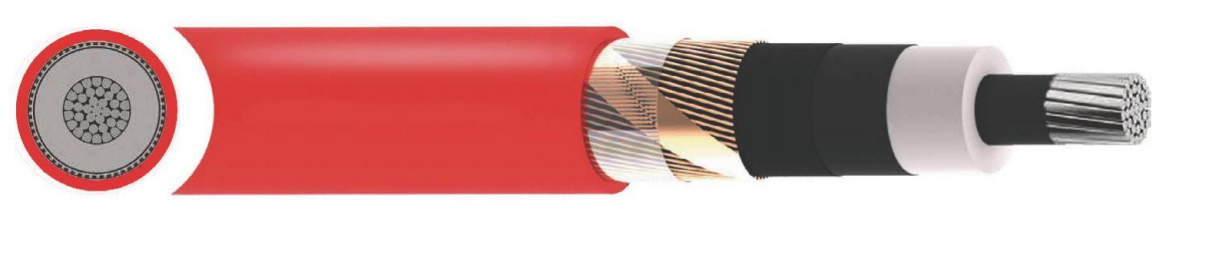
What went wrong? You just discovered the copper-aluminum transition problem.
The Physics of Dissimilar Metals
Copper and aluminum expand at different rates when heated. Copper expands about 17 microstrain per °C. Aluminum expands about 23 microstrain per °C. When current flows, the terminal warms up. The aluminum conductor tries to grow more than the copper lug.
Over hundreds of thermal cycles, that differential movement works the connection loose. A loose connection has higher resistance. Higher resistance creates more heat. The cycle accelerates until the terminal glows.
Why It's Worse on MV Cables
Low voltage connections can sometimes tolerate a little loosening. But MV&LV power cable terminals on medium voltage circuits carry higher currents. More current means more heat. More heat means more differential expansion. A medium voltage terminal that starts at 0.5 milliohms can reach 5 milliohms after a year of cycling. At 200 amps, that's 200 watts of heat – enough to melt insulation.
Where Other Cables Have It Easier
An energy storage cable inside a BESS rack might see less thermal cycling because the current is intermittent – charge, discharge, rest. An aerial insulated cable swings in the wind, cooling constantly and reducing peak temperatures. But a MV&LV power cable in a conduit runs continuously. The heat builds. The problem compounds.
The Fix
-
Use bi-metallic lugs – aluminum on the conductor side, copper on the bus side. The two metals are friction-welded together, so differential expansion happens inside the lug, not at the terminal screw.
-
Apply an antioxidant compound (like Noalox) to the aluminum conductor before crimping. It prevents the formation of aluminum oxide, which adds resistance.
-
Re-torque the terminal after the first 24 hours of operation, then again after one month, then annually. A torque wrench set to the lug manufacturer's spec is not optional.
-
For critical circuits, use a Belleville spring washer under the bolt head. It maintains clamping force as materials expand and contract.
Real-World Cost
A data center had repeated hot spots on MV&LV power cable terminations. They were using copper lugs on aluminum cables. After switching to bi-metallic lugs and instituting a re-torque schedule, the hot spots disappeared. The fix cost $200 per termination. The downtime they avoided cost $10,000 per hour.
Your MV&LV power cable terminal doesn't have to be a heater. Use bi-metallic lugs, add antioxidant, and re-torque regularly. Copper and aluminum can live together – you just have to manage the marriage.